Our Curriculum
棒宝贝儿童学苑将蒙台梭利教育理念与中国传统文化的浸润相融合,探索并实践具有本土特色的蒙台梭利教育。蒙台梭利教育是一种贴近生命、探索生命、尊重生命的教育观。蒙台梭利博士曾提出,教育的最终目标,是成为儿童生命发展的支持与助力。在棒宝贝,我们为孩子创设安全、健康且“有准备的环境”,并基于每个孩子的发展特点,提供个性化的学习支持。孩子可以在自由与秩序中自主选择工作,遵循内在发展节奏,展开探索与学习。我们的教师既是环境的设计者、资源的提供者、教具的引导者,也是细致的观察者与温和的支持者,陪伴每一位孩子成长。同时,我们重视家园共育,与家长携手理解与回应孩子的真实需求。
我们始终相信,每一个孩子都是独特的个体。在棒宝贝,孩子被看见、被尊重、被鼓励,在充满爱与支持的环境中,逐渐成长为独立自主、富有创造力与探索精神,并拥有持续内驱力的最好的自己。
棒宝贝儿童学苑为美国蒙台梭利协会(American Montessori Society, AMS)认证(AMS Verified)的专业蒙台梭利学校。
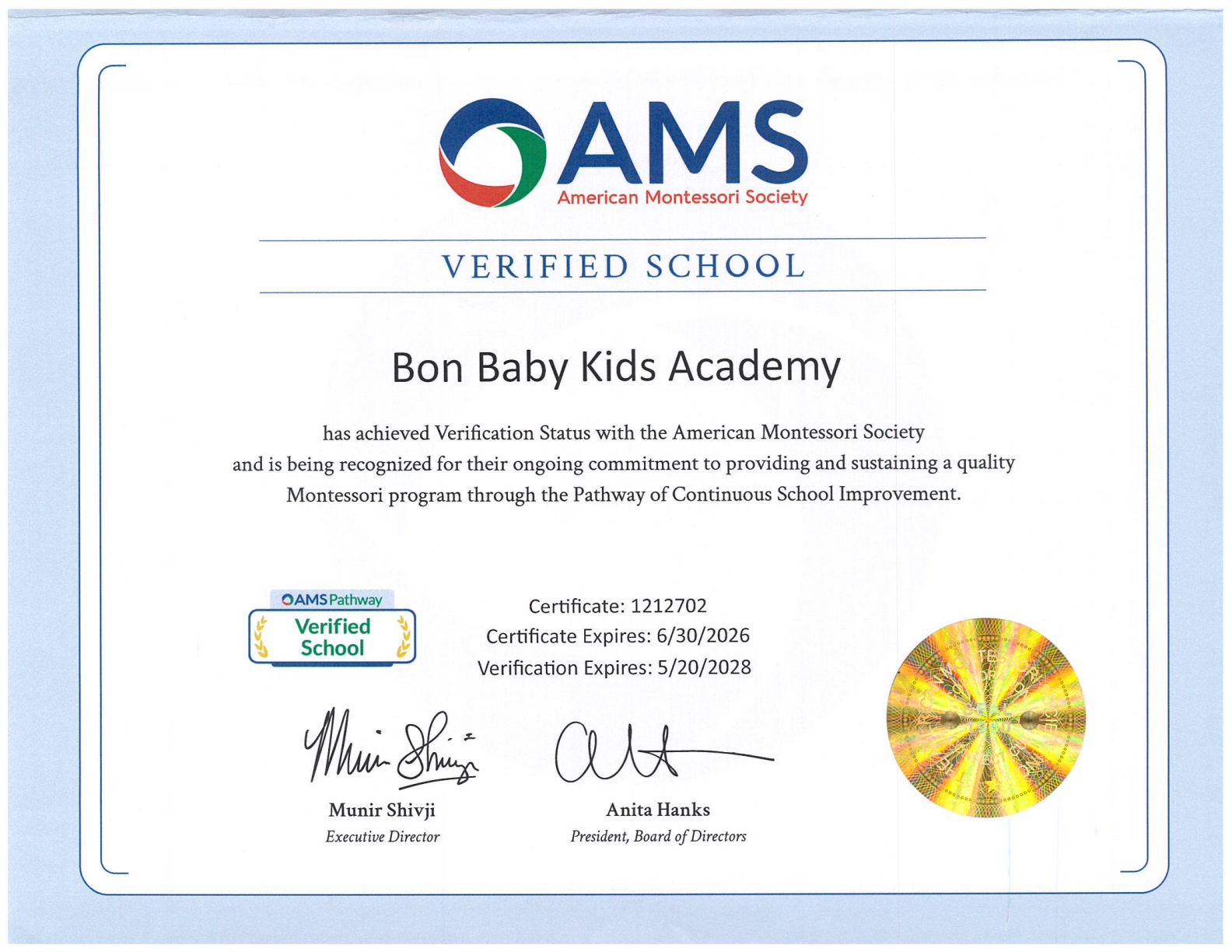
棒宝贝儿童学苑是一所通过 American Montessori Society 官方认证的 AMS Verified School。这一认证标志着我们在教学环境、师资配置以及教育实践等方面,均符合国际蒙台梭利教育的严格标准。我们始终坚持“以儿童为中心”的教育理念,为孩子提供安全、健康、充满探索机会的成长环境。在这里,蒙台梭利不仅是一种教育理念,更是一种贯穿一日生活的真实实践——引导孩子在自由与秩序中成长,发展专注力、独立性与内在驱动力。我们相信,每一位孩子都是独特的个体。棒宝贝致力于培养具有自信表达力、良好学习能力以及面向未来的世界公民。Bon Baby Academy is proud to be an AMS Verified School, officially recognized by the American Montessori Society for meeting rigorous standards in authentic Montessori education.This recognition reflects our commitment to a carefully prepared environment, qualified Montessori educators, and a child-centered approach that honors each child’s natural development. At Bon Baby, Montessori is not only a philosophy, but a lived experience woven into each day—supporting children to grow in independence, confidence, and a genuine love of learning. We believe every child is unique. Our mission is to nurture confident communicators, capable learners, and compassionate global citizens ready for the future.
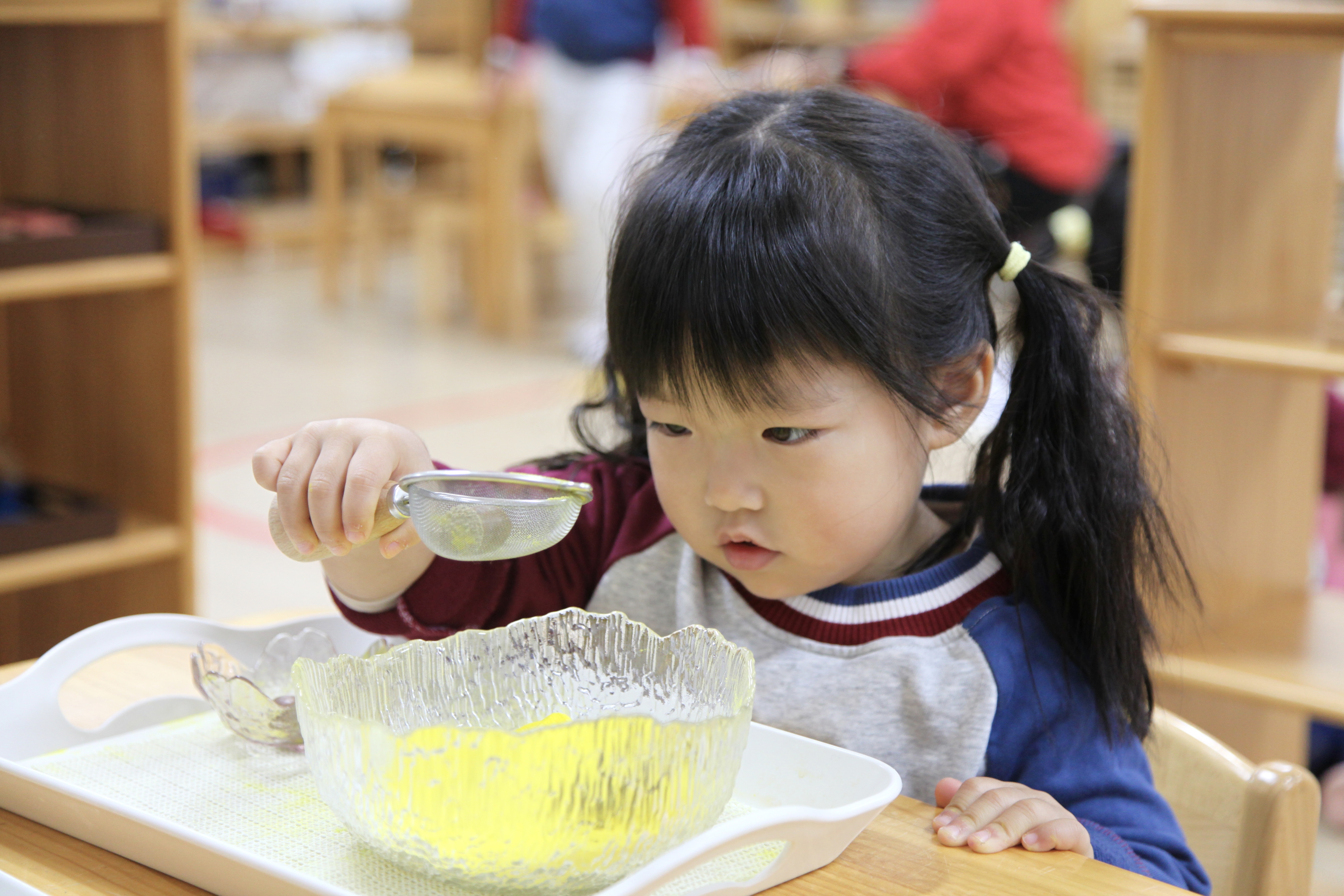
最好的教育源于生活,回归于生活,蒙台梭利日常生活区工作的设置与棒小宝非常熟悉的家庭环境极其相似,贴近最真实的生活,棒小宝在实际生活中经常向往的尝试都能一一实现。日常生活区的工作设计包括动作控制,照顾自己,照顾环境,和优雅与礼仪四个部分。教具架上的工作,有秩序的陈列,每一个托盘里的工作,按照从上到下,从左到右,从简单到困难的顺序有序的排列。通过日常生活区的工作,有序的练习倒,抓,舀等动作,有利于棒小宝秩序感的发展;棒小宝在反复的捏、抓、穿、倒等动作练习中,提高了手眼协调能力和肌肉力量,也为今后的书写做准备;同时棒小宝学会独立的穿脱衣物,准备食物,独立用餐,如厕等照顾自己的能力,学会擦玻璃,洗毛巾,擦叶子,洗桌子等照顾环境的能力,让提高棒小宝们的独立性;当棒小宝们醉心于喜欢的工作,一遍一遍的反复练习,从有调整到熟练掌握某项技能,专注力自然而然的提高,成功的体验是就自信心的源泉,总之如蒙台梭利所说,儿童通过自立获得身体的独立,通过自由的使用其选择能力获得意志上的独立;通过没有干扰的独立工作获得思想上的独立,帮助棒小宝完成从生理独立到心理独立的过程。The best education begins in life and returns to life. In Montessori practical life, children engage in familiar, real-life activities—refining movement, caring for themselves and their environment, and practicing grace and courtesy. Through purposeful, repeated work, they develop coordination, order, independence, and concentration—building confidence and growing from physical independence toward inner independence.
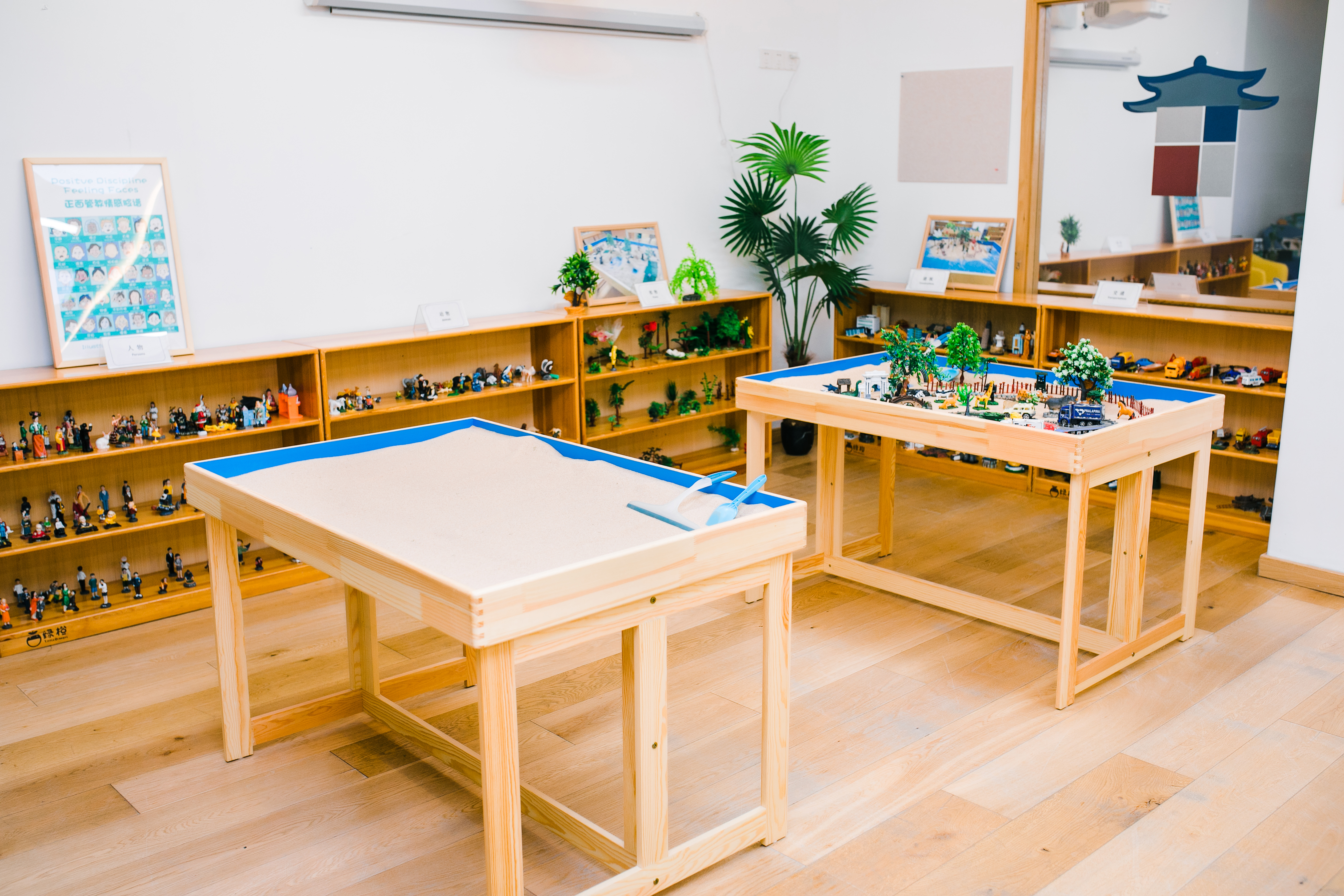
包括视觉、触觉、听觉、嗅觉和味觉等感官的训练,视觉训练在于帮助幼儿提高度量的视知觉,鉴别大小、高低、粗细、长短、形状、颜色及不同的几何形体;触觉练习则是帮助幼儿辨别物体是光滑还是粗糙,辨别温度的冷热,辨别物体的轻重、大小、厚薄;听觉训练是要使幼儿习惯于区分声音的差别,使他们在听声的训练中不仅能够分辨音色、音高,还能培养初步的审美和鉴赏能力;嗅觉和味觉的训练则是注重提高幼儿嗅觉和味觉的灵敏度。因此棒小宝在感官区的工作中能够精准的区分出物体的颜色、大小,声音的高低、远近,温度的冷热,从而能够更好的建立起对世界的认识,总结和发展事物的规律,通过吸收性心智、秩序的人类倾向、完美的人类倾向等将感知进行分类和有序的排列,他们才可能运用他们的感官更好的探索和认识世界,才能够为接下来更抽象的逻辑发展奠定基础,为棒小宝的数学心智的建立做准备。The sensorial area engages all five senses—sight, touch, hearing, smell, and taste—helping children refine their perception of the world. Through carefully designed materials, children learn to distinguish differences in size, shape, color, texture, weight, temperature, and sound.By classifying and organizing these sensory experiences, children build a clear and ordered understanding of their environment. This process strengthens observation, concentration, and discrimination skills, laying a strong foundation for logical thinking and future mathematical development.
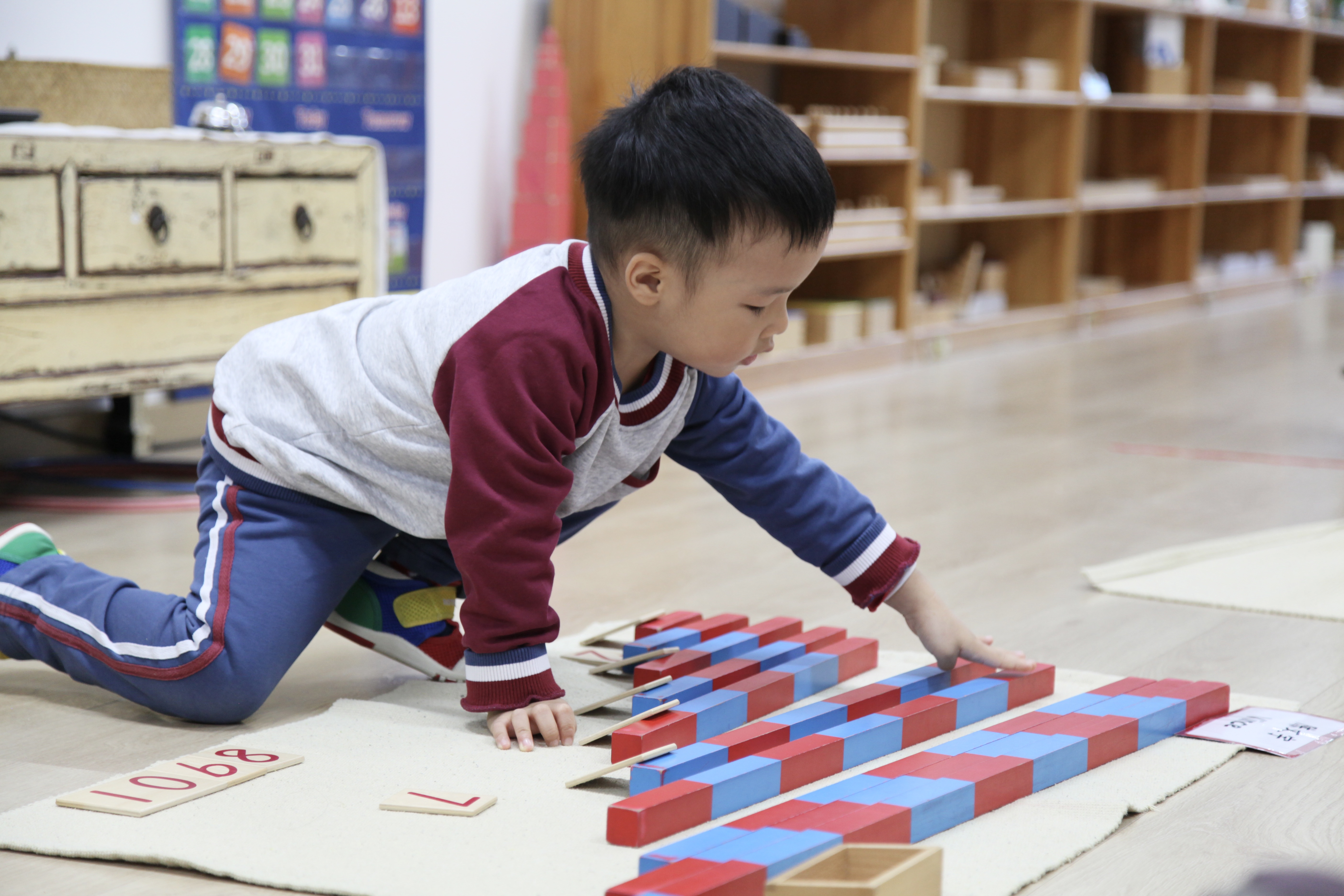
儿童智力发展分为三个阶段,第一阶段:行为把握;第二阶段:图象把握;第三阶段:符号把握。行为把握就是儿童通过操作物体来获取知识,而幼儿学数学就是一个“做”的过程,一个操作活动的过程,一个通过操作活动来获得经验和体会的过程。蒙台梭利数学充分诠释了这一理论,数学区工作的设置以系统、具体、简单的实物教具为起点,让棒小宝动手操作,对实物的多与少、大与小了解,自然而然地联想出具体与抽象之间的关系,把看似高深的数学概念简单化。棒小宝只有通过自己的操作活动,并达到内化,才能真正理解并建构数的概念及关系,比如日常生活中倒水、倒豆子的工作,让棒小宝潜移默化中接触到守恒与分配的概念;而洗布、泡茶等活动,可以帮助棒小宝们发展动作逻辑秩序和空间组织能力,专注与精准性等等。 同时借助教具的操作,通过科学的教学方式帮助棒小宝培养敏锐的观察力、逻辑思考能力、抽象思考能力、想象力、判断力、分析能力,比如感官区的教具让棒小宝触及到平面几何图形、立体几何图形的构成,二项式、三项式等这些传统教学中深不可测的数学知识。还有数学区中的十进制等工作,这些都是把深奥的东西简单化、图形化、实物化,由难变易,由繁变简,培养棒小宝学习数学的兴趣,促进数学性心智的发展。Children’s cognitive development progresses from action to imagery, and finally to abstraction. Montessori mathematics follows this natural pathway—beginning with hands-on exploration and gradually moving toward abstract understanding.Through concrete materials, children experience mathematical concepts such as quantity, size, and number relationships in a clear and tangible way. Everyday activities—like pouring water or transferring objects—quietly introduce ideas of conservation, distribution, order, and precision.With carefully sequenced materials and scientific guidance, children develop observation, logical thinking, abstraction, and problem-solving skills. Complex concepts—such as geometry, binomial relationships, and the decimal system—are made visible, simple, and meaningful.In this way, mathematics becomes not something to memorize, but something to understand—nurturing a deep interest in numbers and supporting the development of the mathematical mind.
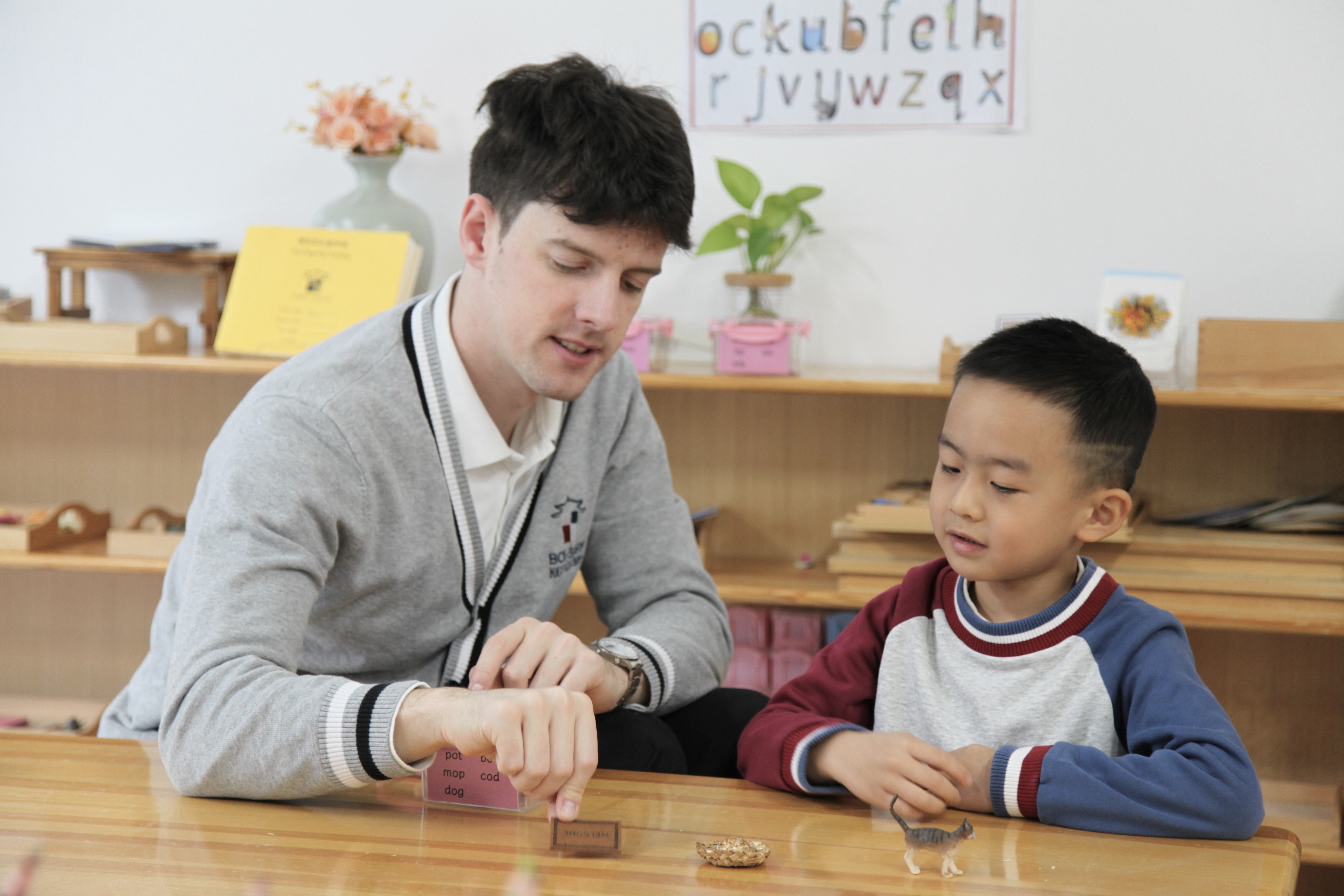
蒙台梭利语言区域主要分为8个方面:视觉、口语、听觉(声律启蒙融合)、运动准备、技能整合、阅读、文字(文字素养融合)、书写功能; 在蒙台梭利教室里通过口头表达、通过各类具体的操作材料,例如模型、砂纸卡、图片等,帮助幼儿了解英文字母或者汉字的组成、发音和意义,满足幼儿听、说、读、写能力的发展需求。蒙台梭利语言区常见的两个英文的教具是教棒小宝识别字母的发音和如何通过字母/发音组成单词的:砂纸字母板和移动字母。砂纸字母板让棒小宝能够通过手指描摹每一个字母的书写和说出字母的发音;移动字母让棒小宝在握笔写字前能够通过字母的声音和符号来创造出想表达的单词,中文语言区则是拼音字母版和移动拼音盒,以及笔画砂纸版等。蒙台梭利认为书写先于阅读;前者是低级的语言阶段,主要是心理运动机制起作用,而后者即阅读则是纯粹的智力活动。书写方法能为阅读做淮备,使阅读几乎毫无困难。同时物理书写是一件复杂的事情,不仅要知道笔画的方向,字母或者汉字的形状,还要掌握握笔的姿势。想要棒小宝习得优美的书写方式,就需要用优美的方式进行书写示范。还要准备精美的教具使得棒小宝愿意用这些教具进行书写。所以我们有金属嵌板的工作,让棒小宝练习如何握笔;砂纸笔画和部首,让棒小宝了解英文字母或者汉字的笔画顺序;还有毛笔、粉笔和铅笔等让棒小宝练习书写。当棒小宝既预备好他的大脑,也预备好他的手,就可以自由的写作了。蒙台梭利认为语言区域的目的应该是要培养棒小宝的完整人格,而不仅仅是培养一项语言技能,3-6岁语言教育的关键是增强儿童运用语言手段表达自己的自信心。The Montessori language area supports children’s development across eight key domains, including visual recognition, oral expression, auditory awareness, movement preparation, skill integration, reading, writing, and overall literacy.Through rich verbal interaction and hands-on materials—such as objects, sandpaper letters, and picture cards—children explore the structure, sounds, and meaning of both English and Chinese. Materials like sandpaper letters and the movable alphabet allow children to trace letter forms, connect sounds with symbols, and build words before formal writing begins. In Chinese, tools such as pinyin boards, movable pinyin, and sandpaper strokes support a parallel path.Montessori emphasizes that writing precedes reading. By preparing both the mind and the hand—through activities like metal insets, tracing, and varied writing tools—children develop coordination, precision, and confidence.In this process, language becomes more than a skill; it becomes a means of self-expression. Our goal is to nurture confident communicators and support the development of the whole child.
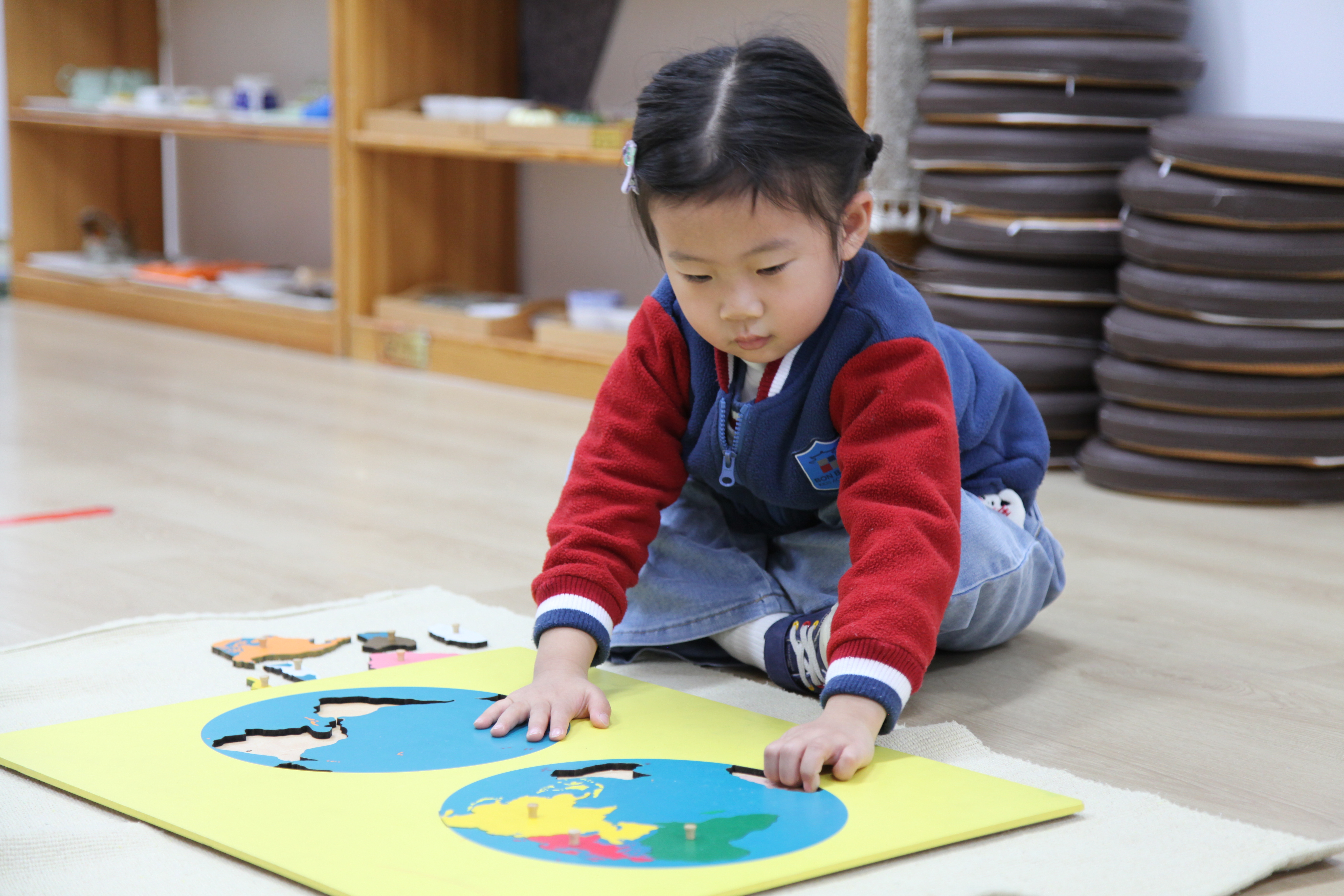
科学文化教育是从整个宇宙的观点开始的,建立宇宙观,认识整个地球开始,再逐渐认识各大洲,所属的州,最后才认识自己的国家,建构棒小宝对整体世界观的概念基础,了解到各族群的差异,进而能欣赏与接纳不同文化,成为世界公民。在蒙台梭利教室里,文化区域包括天文、地质、动物、植物、地理、历史、艺术等。以生物为主轴就是动物、植物的范畴;以空间为基础,学习日、月、星星的则是天文;研究地球内部的科学称为地质;地理则是以空间为基础,研究与地面各种自然现象,以及和人相关的科学,因而有自然地理及人文地理之分;历史则是研究时间及时间与万物间的关系;艺术则包括学习音乐、美术的元素、技巧和鉴赏等可以调剂精神生活的科学。 所有的一切都是让棒小宝学习如何照顾动物、植物,了解自己所居住的大环境、了解宇宙万物的奥秘、认识各种矿物等。同时探讨人与环境、人与自然之间的关系,建立自我概念;从欣赏、观察、认识中培养棒小宝对宇宙和大自然的热爱及责任感,培养幼儿在未来有足够的能力和适应力、独立工作和自我发现。Montessori cultural studies begin with a cosmic perspective—helping children understand the universe, the Earth, and gradually their place within it. From the whole to the parts, children explore continents, regions, and countries, building a foundation for a global outlook and developing respect and appreciation for diverse cultures.The cultural area includes astronomy, geology, biology, geography, history, and the arts. Through hands-on exploration, children learn about animals and plants, the Earth and its structure, natural phenomena, and the passage of time. They also engage with music and art, enriching both knowledge and aesthetic appreciation.Through these experiences, children develop an understanding of the interconnectedness of life and the relationship between humans and the environment. This nurtures curiosity, responsibility, and a sense of wonder—empowering them to care for the world around them and grow into capable, independent, and compassionate global citizens.
Our philosophy
有时是教育
经常是帮助
总是在鼓励
To teach sometimes. To help often. To encourage always